


_2d2230.png)
_5a42ce.png)
All Activity
Today
-
Williemob joined the community
Yesterday
-
-R===========TR -Sounder Hold off====0v +Sounder hold off====12v S=====OP1 ST=====OP2 program OP1 as Bell, OP2 as strobe
-
gmsltd joined the community
Last week
-
Good job
-
There should be an option for cc instead the fsl etc
-
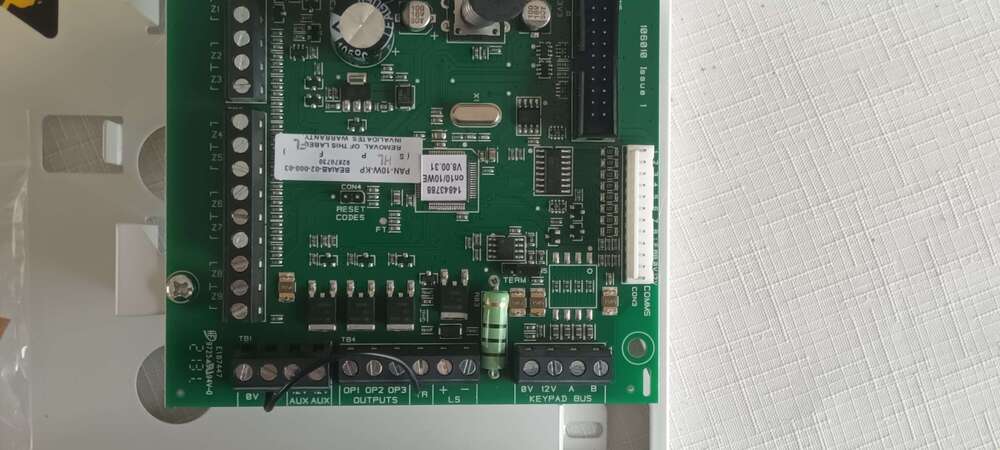
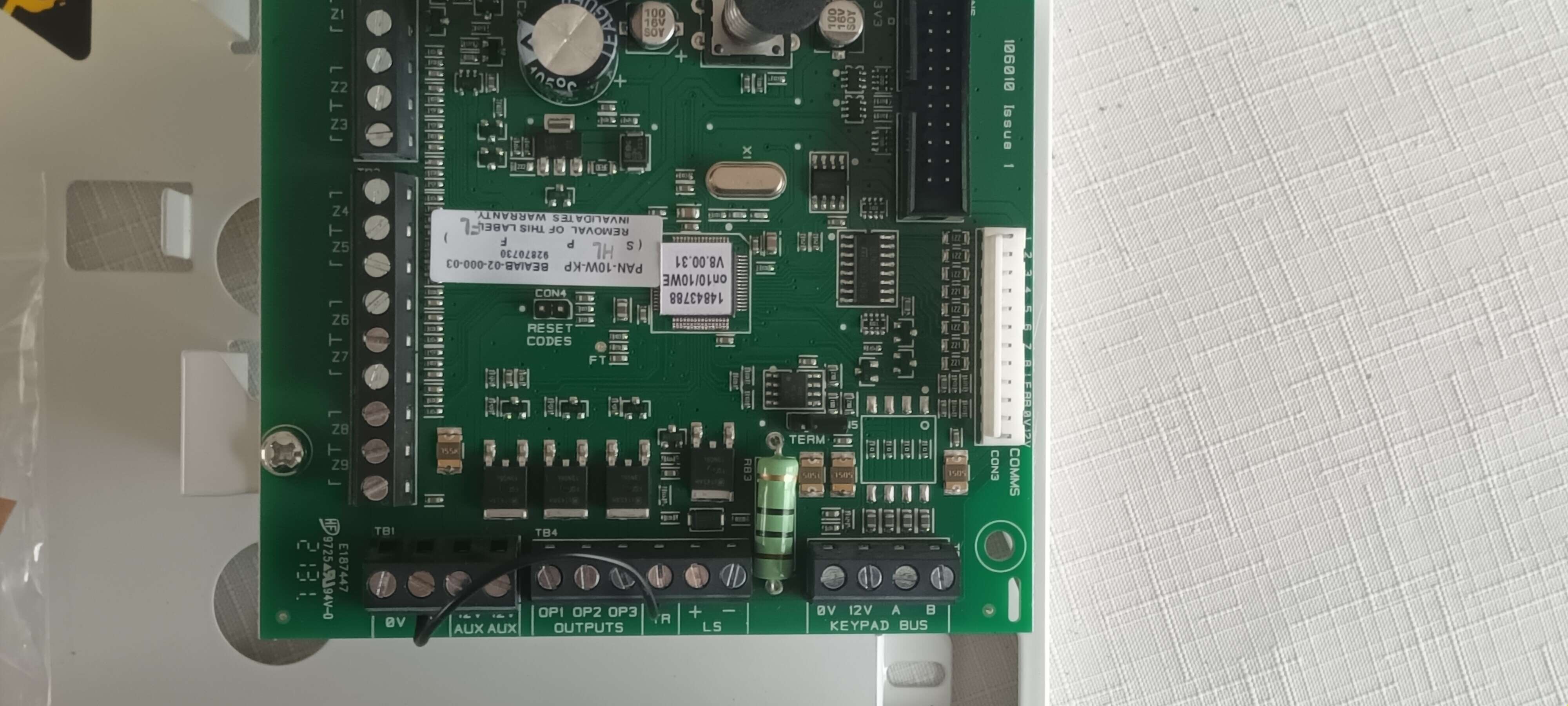
Many thanks for the replies, comments and ideas. The external sounder is a Odyssey X-BE Connections shown below. -R Sounder Tamper Return ( Negative ) - Sounder Hold Off / Supply ( negative ) + Sounder Hold Off / Strobe ( Positive ) S Sounder Switched Negative Trigger ST Sounder Switched Negative Trigger Maybe I'm reading wrong or I have the wrong Installation Manual but what I do have seems to suggest that an External Sounder cannot be fitted ?. This seems to contradict all the information on all the adverts for a Eaton/Scantronic pan-10w-KP. While on the PCB of this unit connections for stuff like voltage and Zones are obvious there is nothing obvious for connections for an External Sounder. I'm thinking of connecting the unit without a Sounder and checking what / if any connections go "Low" when system triggered.
-
FrankAnype joined the community
-
Im not familiar with ION so this is guesswork and what I can see on the pcb. Unless there is a global tamper I would say you need EOL on the circuits. LS would be loud speaker? The link going to TR would be tamper return I cant see the terminal marking where the link comes from but I would guess hold off pos and neg output 1 bell 2 strobe. Again all guesses, but Ive done this alarm installing sort of thing before a few times
-
Update – solved! Thanks a lot for the help, especially the idea of testing one detector on its own. What I found: One spare PIR alone on a short cable at the C090: worked perfectly, and kept working with the whole loop reconnected. So the loop (10.27 V at both ends), the wiring and the C090 V1.01 are fine with the Smart V-Plex detectors. Ingresso Sotto PIR: faulty board. Swapping the boards between two boxes proved it, because the fault followed the board. Replaced with a spare, now OK. The two DT7500SN were fine all along. I checked them with RSS Mimic Panel on a laptop next to the detector: the zone opens every time the LED goes red (amber = only one technology = no alarm). Before, I was checking at a keypad far away and missed the short alarm, or only got amber. Next: the glass-break detectors, with the FG-701. Thanks again!
-
C&K thing ?
-
what sounder do you have ?
-
Hello. Apologies for the long message. Obviously technology changes and as I’ve been retired for a number of years it’s has changed. The Home Alarm system I fitted 20 plus years ago has finally given up so I have purchased an Eaton Scantronic PAN-10W-K Included with the Unit were QR codes to download User and Installer Manuals. While I was able to download the User Manual I was unable to download the installation Manual as I had to register my details and as I was not part of a company I was unable to do so. So this means I have a problem with some connections as the Main PCB connections are not obvious. The connections for the PIRs seem to be obvious with two zones sharing a common connector and a dedicated connector for each PIR. So I will wire the PIRs ( Without EOL resistors ) , no problem but I will not bother with the Tamper Wires unless someone thinks it’s a good Idea that I should. If I don’t connect Tamper there must be a wired link I should do so where / how. If I do connect the Tamper wires where do I connect on the Main PCB ( See Below ). I realise that he Tamper for the Keypad is done digitally. My problem / Confusion is connecting the External Sounder. The old Alarm showed connections as, -R Sounder Tamper Return ( Negative ) - Sounder Hold Off / Supply ( negative ) + Sounder Hold Off / Strobe ( Positive ) S Sounder Switched Negative Trigger ST Sounder Switched Negative Trigger There are Ten connections on the Eaton Scantronic PAN-10W-K. 0v , 0v , 12v Aux , 12v Aux , OP1 , OP2 , OP3 , TR , LB+ , LB- I suspect that one the 0v and 12v Aux can be used for the voltage to the PIRs but where / how do I connect he Sounder ?. While I have not connected / powered up the unit when I do I have to hold both the A button and Tick button at the same time. One of the options is 2 wire FSL but this also shows 2k2 / 4k7 which is for EOL resistors. As I won’t be using EOL resistors is this a problem or is there another setting ?. Many thanks in advance for help, advice and suggestions. Don.
-
Foldart joined the community
-
Thanks! Loop voltage: I measured it at the C090 V-Plex terminals and at the last detector at the far end of the loop (a PIR): 10.27 V at both ends, so no voltage drop on the cable. The supply into the C090 is 13.75 V. There are 26 devices on the loop (about 20 4191SN contacts, 3 FG-1625SN, 3 PIRs), well within the 128 mA of the C090. No wireless at all. Everything is wired V-Plex (Ademco “SN” devices) on the C090 loop, learned by serial number. Nothing is wired to the panel’s own zones. 4191SN door/window contacts: work fine (open/close and tamper). DT7500SN and IS2500SN-type PIRs, and FG-1625SN glass-break: only tamper reaches the panel, never the alarm. The single-detector test is still to do; I’ll report back.
-
puhatuci1292568 joined the community
-
iojewjwe09j joined the community
-
Not that it's the problem , why only 10.28v? And just to be clear it's only the wired detectors that won't alarm? And wireless that are learned are ok?
-
when you have multipal stuff on one zone the shock normally do first to alarm, latch ect...
-
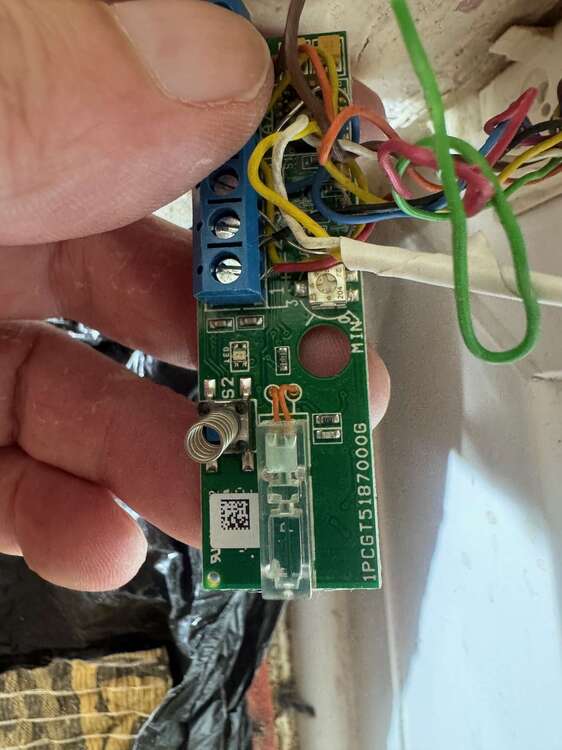
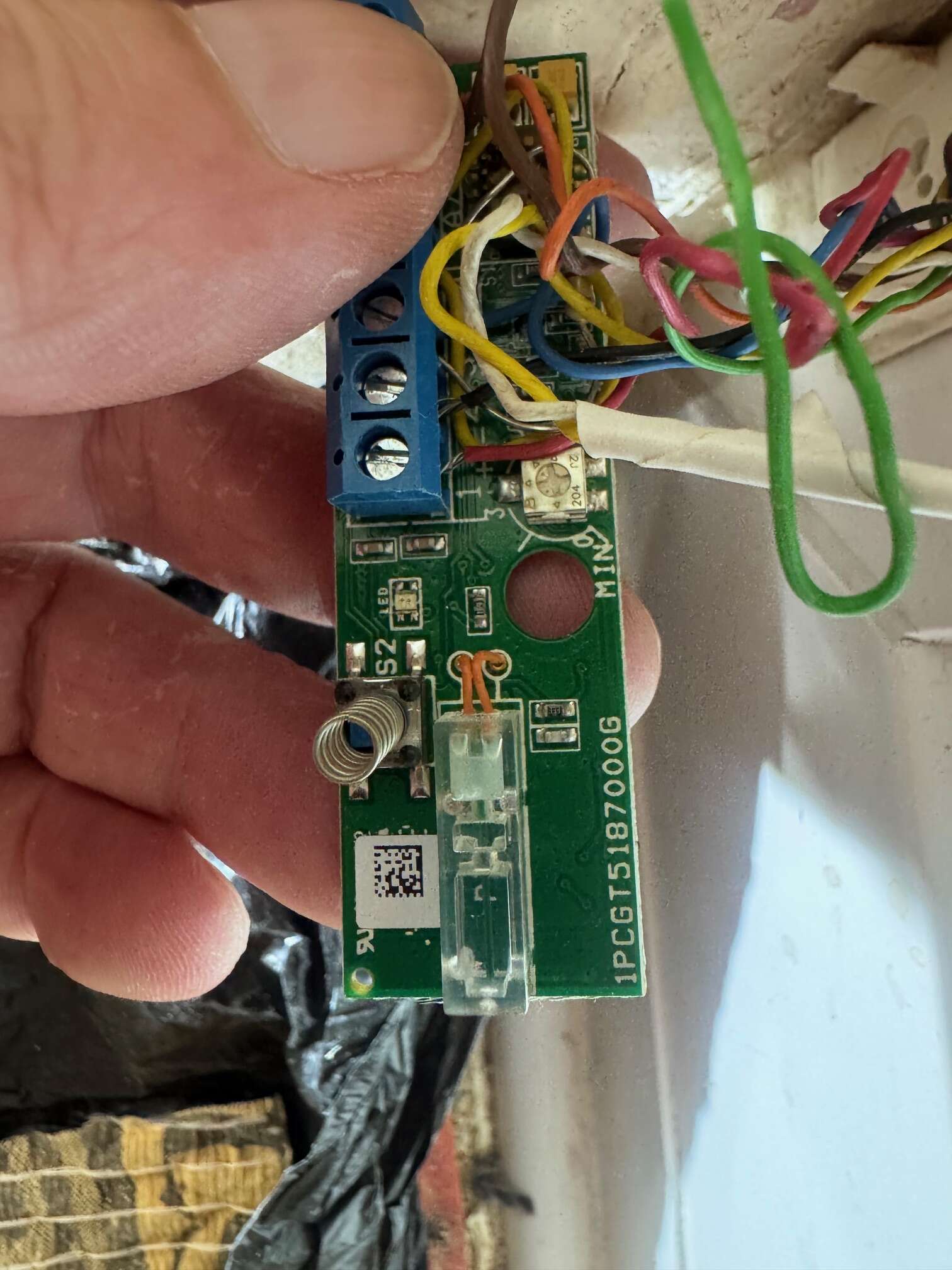
Those look double pole to me but your thumb is over the terminals in the picture so cant be sure. It looks like it was terminated by a 5 year old though, you shouldnt be able to see any strands of wire like that.
-
Hi, many thanks for responses. The shockgard is on a multiple circuit, it's on a side door but there is the kitchen windows and downstairs toilet window all on the same circuit. I have attached a pic of the one on the side door, as at the moment not sure what 'Circuits are double poled or doel on zone per zone basis (4k7 /2k2)' mean. So I will have to do some more investigations into this meaning.
-
Circuits are double poled or doel on zone per zone basis (4k7 /2k2) What can replacing the existing item ? Probably anyl "viper' depending how it's wired Is 1 item on the circuit or multiple?
-
If the panel is over 30 years old it will be using double pole tamper and alarm circuits rather than EOL so you can use any shock detector with separate tamper and intruder circuits
-
Hi, I have a Menvier TS700 which was installed professionally by a company local to me 30 years ago. It's been a great alarm system and never given me issues until recently. One of the shockgards seemed to have stopped working. As the system is quite old now you don't seem to be able to obtain these shockgards, I think they're a shockgard 2 or maybe even shockgard 1. My question is can you change these for a shockgard 3 which seem to be what's currently on the market or is there another substitute that would work? Many thanks in advance for any useful help or advice.
-
SOLARTODO joined the community
-
Thanks again! Zone attributes: type Intruder (default), resistance 00 (system, 1k fault/BAL), part set on, response tried both System and Fast. Same settings as the 4191SN contact zones, which work. Wiring: V-Plex is a 2-wire loop (red +, black –) to each detector, polarity checked, 10.28 V at the C090 and the detectors power up normally. The working 4191SN contacts are on the same loop. Enrolment: Serial Poll, Loop 1 (also tried Loop 2), serial entered manually (7 digits from the label) and also by auto-learn, which captures the right serial when the detector goes into alarm. The C090 shows the zone as programmed (L1). Good idea about isolating one detector – I haven’t done that yet. I’ll delete all the zones on the C090, connect a single DT7500SN directly to the C090 loop terminals with a short cable (everything else disconnected) and report back.
-
Welcome Andysid. Fairly new here myself and I'd agree with PeterJames, it's a good bunch. Are you in the trade or more on the DIY side?
-
Hi and welcome the site is not as busy as it once was, but the ones that continue to visit are a good bunch old school
-
Welcome to the twilight zone , you will tested with the aircraft scene first....
-
Hi to evyone, just introducing myself as I'm new to this site. Reading a lot of interesting views and advice.
-
Andysid joined the community
Earlier
-
So what is the zone attribute set as? Data wiring to each detector correct? You sure they are enrolled correctly maybe, delete them all off and disconnect all the detectors except one and try to get that to work?
-
KevinGomez joined the community
-
Thanks for replying! Here’s what I’ve checked so far: Addressing C090 first on line 1 (RIO addresses 3-5), then moved to line 2, RIO addresses 2, 3, 4, 5 enabled → panel shows RIO 202-205, V1.01, 100% comms. No other RIOs on line 2. Line 2 = panel → C090 → TouchCenter (end of line). Power C090 fed from a separate Power RIO (P026) AUX output: 13.75 V at the module (61-1-3). V-Plex loop at the C090 terminals: 10.28 V DC, polarity correct. Sensors are powered and their LEDs behave normally (PIR goes red on movement). Tests done 4191SN contacts: open/close correctly → loop and serial entry OK. DT7500SN: learned by serial (manual and auto-learn, auto-learn captures it when it goes into alarm), Loop 1 and Loop 2, zone response Fast, Walk Test (31), system set → never an alarm at the panel, only tamper (cover off = open-circuit tamper, cover on = closed). Two different DT7500SN units and two IS2500SN-type PIRs: same result. So the C090 clearly talks to the detectors (learn + tamper work), but motion alarms never get through. Any idea what else to look at? Is V1.01 known to have issues with the “Smart” V-Plex detectors? Thanks!
-
al-yeti started following Connect External Sounder
-
What you check so far ? Did you try addressing it elsewhere where ? Power readings at the v90? And so on lots of tings to look at Where is that dude galaxy guy when you need him ( @Galaxy Guy











Who's Online (See full list)
- There are no registered users currently online
Member Statistics
- 52,455 Total Members
- 1,932 Most Online
-
Williemob Newest Member ·
Forum Statistics
- Total Topics 33.6k
- Total Posts 448.8k